Why the diagnosis comes before the device
A package advertised for brown spots may sound like the solution to patchy facial discoloration. But melasma, marks left by inflammation and other pigmented lesions need different assessments. Start with a dermatologist’s diagnosis and use our Chicago provider selection checklist to evaluate a clinic’s assessment process.
Prepared by the Chicago Med Spa Reviews editors. This is general patient education and has not been reviewed by a clinician. Our review methodology and relationship disclosures explain how the site operates.
The AAD melasma treatment guidance describes a plan tailored to skin tone, pigment depth and triggers. That makes a diagnosis more useful than asking which laser is most powerful. If a clinic recommends a device before discussing what the patches are, ask for a medical assessment first.
Bring dated photographs if you have them, a note of when the patches began, and a list of products you have tried. Note any relationship to sun exposure, pregnancy or hormonal medicines. An unusual or changing spot needs medical assessment before cosmetic treatment.
Melasma commonly presents as patches of facial discoloration. Starting with a dermatologist helps distinguish it from other causes. The AAD describes sun protection, topical medicines and selected procedures as parts of a tailored plan; none should be chosen solely from a photograph or promotion.
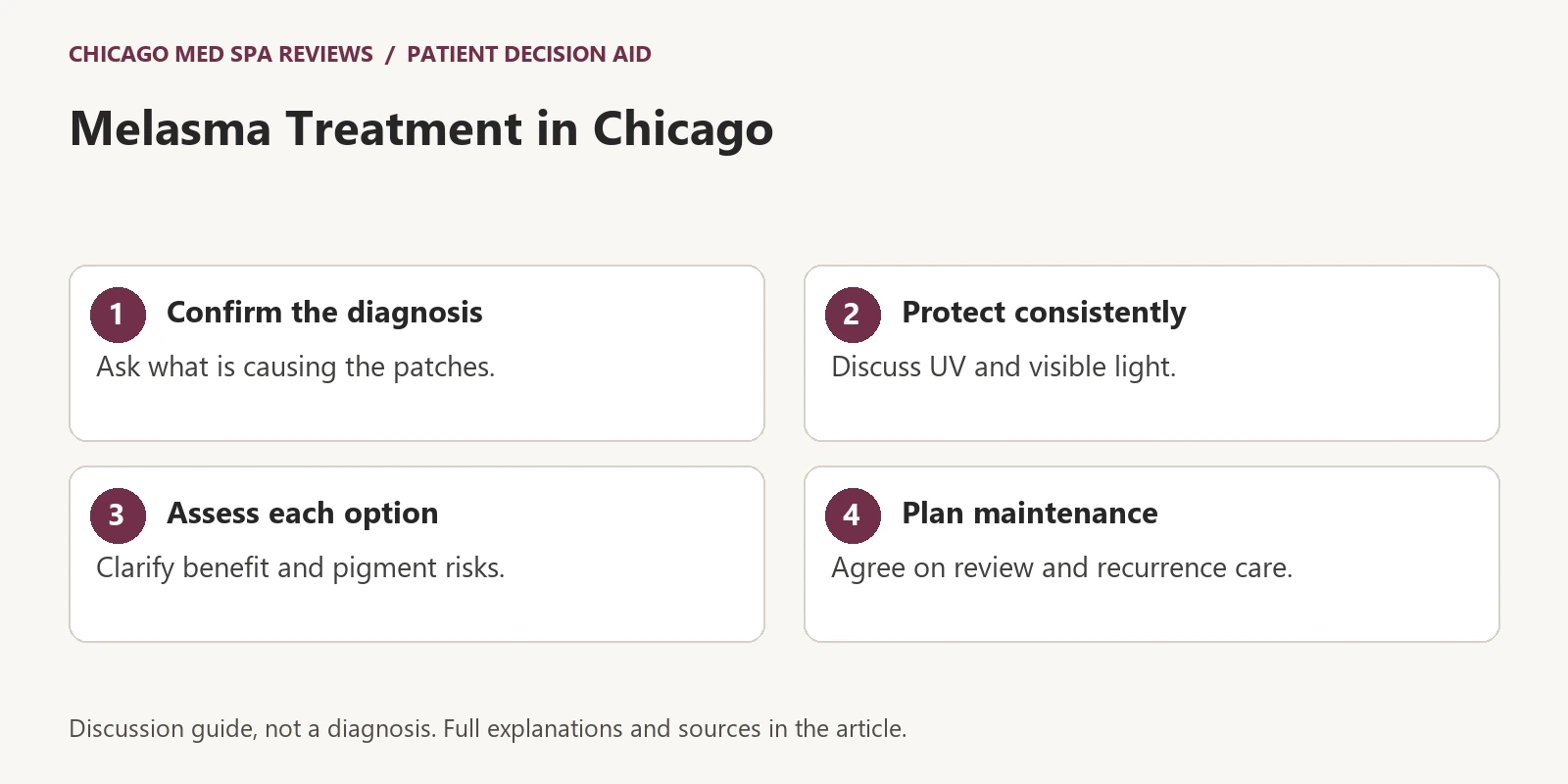
Use the four-step roadmap to organize your visit: Confirm the diagnosis, protect consistently, assess each option, plan maintenance.
Compare a pigment plan with a spot-removal package
Use these distinctions to understand a recommendation. The table does not tell you which medicine or procedure to use; it helps you find out whether the proposed treatment has a purpose and a maintenance strategy.
| Part of the plan | What to clarify | Warning sign in the sales pitch |
|---|---|---|
| Diagnosis | Why the clinician thinks this is melasma | Every brown patch is called sun damage |
| Daily protection | How to protect against UV and visible light | Protection is described as optional |
| Prescription treatment | Suitability, duration and monitoring | A prescription is sold without a health history |
| Peel or device | Why this option fits your skin and previous response | One session is promised to cure the condition |
| Maintenance | What happens after improvement | No plan for recurrence or review |
Make daily protection workable in Chicago
The AAD self-care guidance recommends broad-spectrum, water-resistant SPF 30 or higher and a tinted sunscreen containing iron oxide for visible-light protection. It also advises gentle products because irritation can darken spots. Ask your clinician how to apply that advice to your skin and routine.
Translate the plan into situations you actually encounter: a walk to the train, a lunch outside, an afternoon driving, or an outdoor event. Ask what to reapply and how to make it work with makeup. A product you can tolerate and use as directed is more useful than an elaborate routine that you abandon.
Winter does not remove the need to discuss protection. Our Chicago winter treatment guide covers planning around healing and exposure. Avoid treating the season as permission to skip the clinician’s precautions.
Ask what a procedure adds to the existing plan
If a peel or light-based procedure is proposed, ask why it is suitable given your diagnosis, skin tone and history. Request the exact treatment name, the intended benefit and the plan if discoloration worsens. Review our chemical peel guide for questions about depth and recovery.
Discuss the possibility of treatment-related darkening before a peel or laser, especially if your skin develops dark marks after irritation. Ask how that risk affects the device choice and what happens if the patches worsen. Our laser safety guide for darker skin organizes those questions. The goal is not to assume every pigment procedure is suitable for melasma.
Do not buy or copy a prescription regimen from an online discussion. Tell the prescriber about medicines, pregnancy plans and medical history. If oral medicine is proposed, request the exact name, whether its use for melasma is off-label, the risks and the monitoring plan. A prescription decision belongs with the clinician who assesses you.
A useful clinician should be able to explain why waiting, adjusting topical care or declining a procedure may be better than adding treatment now. Ask what improvement they need to see before reconsidering a device.
A practical example: the package is not the whole budget
Imagine a patient with recurring cheek patches who is offered a three-session pigment package. Before paying, they should ask whether the examination established melasma, whether their current products irritate their skin, and whether the package includes review if patches become darker. This is a planning example, not evidence that three sessions are appropriate.
Compare the consultation, prescribed products, follow-up and optional procedures as separate costs. The Chicago med spa pricing article explains quote comparison. This guide has no verified local price sample and does not claim a market average.
- Write down the diagnosis and goal of each proposed treatment.
- List prior products, treatments and any reactions.
- Ask which symptoms mean you should stop a product and call.
- Request a plan for maintenance and recurrence.
- Keep dated photographs in consistent light instead of judging daily mirror changes.
- Confirm who performs each procedure, their training and who assesses any reaction.
Set expectations for a condition that can recur
Ask how long to try the initial plan before reassessment and what would count as a good response. Avoid a clinic that guarantees permanent clearing. Budget and schedule around a continuing relationship with the treating clinician rather than a one-time transformation.
For dark marks that follow acne or irritation, the AAD dark spot guidance emphasizes addressing the cause. That is another reason to get the diagnosis right: treating recurring inflammation and treating melasma are not automatically the same project. This is editorial education, not an individualized treatment plan.
Frequently Asked Questions
Can laser treatment cure melasma?
Do not expect a laser to provide a guaranteed cure. Ask a dermatologist whether a procedure is suitable for your skin, what it adds to the current plan, and how recurrence will be managed. A device recommendation should follow diagnosis and discussion of alternatives rather than a package promotion.
What sunscreen should I discuss for melasma?
Ask about broad-spectrum, water-resistant SPF 30 or higher and a tinted product containing iron oxide for visible-light protection. The AAD includes these measures in its guidance. Your clinician can help you choose an approach you tolerate and explain application and reapplication alongside the rest of your treatment.
Is every dark facial patch melasma?
No. Several conditions and post-inflammatory marks can cause facial discoloration. An examination is especially important before buying a peel or device package, and an unusual or changing spot needs medical assessment. Bring a history of when the patches appeared and which products or procedures you have already tried.
How should I compare melasma treatment costs in Chicago?
Ask for an itemized initial plan that separates assessment, prescribed products, review visits and optional procedures. Find out what happens if you do not improve or your pigmentation worsens. This guide does not establish an average local price; a package total alone does not show the full maintenance cost.
Can melasma become darker after a cosmetic procedure?
Discuss that possibility before treatment, especially if you have a history of dark marks after irritation. Ask why the proposed approach fits your diagnosis and skin tone, how the clinician reduces pigment risks, and what review is available if discoloration worsens. A stronger procedure is not automatically a better plan.
Sources
- Melasma: Diagnosis and treatment, American Academy of Dermatology
- Melasma: Self-care, American Academy of Dermatology
- How to fade dark spots in darker skin tones, American Academy of Dermatology